
Views: 0 Author: Site Editor Publish Time: 2025-12-19 Origin: Site


In the world of material handling, the role of forklifts is indispensable, especially in industries that require the transportation of heavy loads over long distances. For businesses that operate in tough environments—such as outdoor warehouses, construction sites, or manufacturing facilities—diesel forklifts offer unparalleled performance. These machines are engineered to handle large, bulky materials and withstand the rigors of demanding work environments. In this article, we will explore how diesel forklift trucks can significantly improve productivity in heavy-duty operations. We will cover the key features of diesel forklifts, how they contribute to cost-effective operations, and why they are the preferred choice in outdoor, high-capacity environments. Additionally, we will explain how YEAWEY diesel forklifts are the ideal solution for businesses looking to optimize their material handling processes.
One of the most significant advantages of diesel powered forklifts is their engine power. Diesel engines are specifically designed to provide high torque and exceptional lifting capacity, making them ideal for industries that require heavy-duty material handling. A diesel forklift truck typically comes with a powerful engine that enables it to lift and move heavy loads efficiently, even in rugged conditions.
The load capacities of diesel forklifts generally range from 5 to 10 tons, which makes them highly suitable for sectors like construction, agriculture, and logistics, where materials are bulky and heavy. For instance, a YEAWEY diesel forklift with a 5-10 ton capacity can handle large shipments of construction materials, pallets of industrial goods, or heavy machinery parts. This capacity makes diesel forklifts the go-to solution for operations that require consistent lifting power and long operational hours.
Diesel forklifts are built to endure the most demanding conditions. Their robust design and durable components ensure that they continue to operate effectively in rough terrains, dusty areas, or high altitudes. Unlike electric forklifts, which are better suited for indoor environments with stable conditions, diesel forklifts are designed for the outdoors, where they are exposed to challenging weather and environmental factors.
Whether it's moving materials across uneven ground at a construction site or navigating a port yard in adverse weather conditions, diesel forklifts are engineered to withstand these challenges. Their tough construction reduces downtime and ensures that businesses can rely on their equipment for consistent performance. This means fewer repairs and disruptions in your workflow, allowing your operations to run smoothly without unnecessary interruptions.
A critical factor for operations requiring constant material handling is refueling speed. Diesel forklifts offer a significant advantage over electric models in this area. Refueling a diesel powered forklift takes only a few minutes, ensuring that the machine is ready to continue working without much downtime. This is in stark contrast to electric forklifts, which can take several hours to recharge, causing considerable disruption to productivity.
In industries that require forklifts to work in multiple shifts or over extended hours, diesel forklifts offer a clear productivity advantage. The quick refueling times keep operations running efficiently and ensure that there are minimal disruptions, which is essential in a fast-paced, heavy-duty environment.
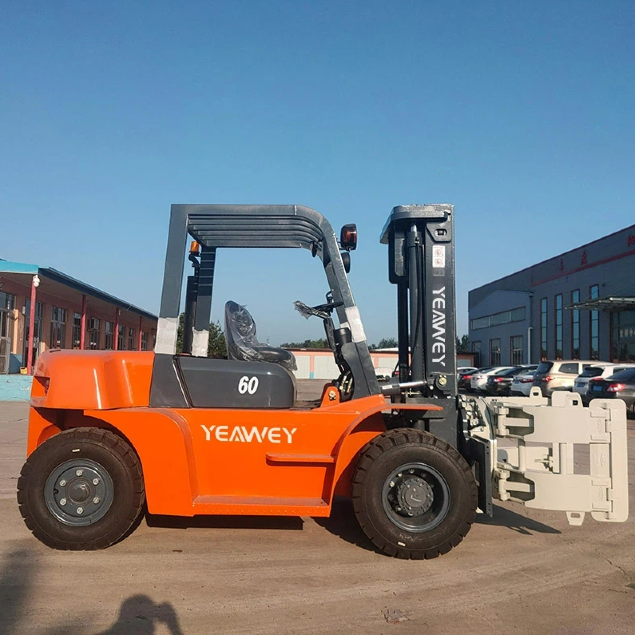
Although diesel forklift trucks typically have a higher initial purchase price compared to electric forklifts, their long-term operational costs are generally much lower. Diesel forklifts are more fuel-efficient for continuous outdoor use, which means that over time, businesses can save on fuel costs.
For example, YEAWEY diesel forklifts are known for their fuel efficiency, with operating costs of approximately $4 to $6 per hour. This is a competitive rate, especially when compared to electric forklifts, which have higher energy costs and are less suited for outdoor, high-intensity work. By investing in a diesel forklift for sale, businesses can benefit from long-term savings while maintaining the high performance and reliability required for heavy-duty tasks.
Additionally, the power of diesel powered forklifts allows businesses to maximize their lifting capacity without requiring frequent downtime for refueling, which increases the overall efficiency of operations and contributes to a better return on investment (ROI).
When investing in any type of material handling equipment, it’s essential to consider the maintenance costs and how they affect long-term profitability. Diesel forklifts generally require regular maintenance, including oil changes, tire replacements, engine servicing, and filter checks. However, these costs are typically lower than those associated with electric forklifts, which require more frequent battery replacements and specialized charging infrastructure.
The maintenance tasks for diesel forklifts are straightforward and relatively inexpensive, especially when compared to electric models. Diesel forklifts tend to have fewer parts that require replacement, and their heavy-duty design ensures that they last longer in rugged environments. For businesses operating in tough conditions, the durability and reliability of diesel forklift trucks translate into long-term savings by reducing the frequency and cost of repairs.
By keeping a diesel forklift well-maintained, businesses can extend the life of the equipment, reduce the need for costly repairs, and keep operations running smoothly. This makes diesel powered forklifts a cost-effective choice in the long run, despite their higher initial purchase price.
When deciding between a diesel forklift truck and an electric forklift, businesses must assess their specific needs and operational requirements. Here’s a comparison of the two types of forklifts, with a focus on diesel forklifts for outdoor and heavy-duty applications.
Better for high capacity: Diesel forklifts are better suited for high-capacity tasks, lifting heavier loads compared to electric models.
Rough terrain: Diesel forklifts are designed to navigate rough and uneven surfaces, making them ideal for outdoor operations like construction sites, agricultural fields, and industrial yards.
Lower operational costs for outdoor environments: Since diesel fuel is more efficient for continuous outdoor work, diesel forklifts offer lower long-term operational costs compared to electric forklifts, especially when used for long shifts or in extreme conditions.
Cleaner emissions: Electric forklifts produce zero emissions, which makes them an environmentally friendly option, particularly for indoor operations.
Lower energy costs: While electric forklifts have a higher upfront cost, they tend to have lower energy consumption and require less maintenance overall. However, their efficiency decreases in harsh, outdoor environments.
In summary, if your business involves heavy-duty lifting in outdoor or rugged environments, diesel forklifts are the better choice. On the other hand, electric forklifts are more suitable for clean indoor environments where emissions and noise are a concern.
Diesel forklifts provide exceptional value to businesses engaged in heavy-duty operations. Their ability to lift heavy loads, endure harsh environments, and operate continuously with minimal downtime makes them the ideal solution for industries requiring maximum performance. From their powerful engines and robust design to their low operational costs, diesel forklift trucks offer an unbeatable combination of power, efficiency, and cost-effectiveness.
If your business operates in outdoor environments or requires high-capacity forklifts for heavy lifting, investing in a diesel forklift for sale is a wise decision. The long-term benefits, including lower maintenance costs and higher productivity, ensure that YEAWEY diesel forklifts will provide the best value for your investment.
For more information on our diesel powered forklifts and to explore our wide range of models, contact us today. Let YEAWEY help you streamline your material handling operations with reliable and durable equipment.
1. How much does a diesel forklift typically cost?
The price of a diesel forklift truck typically ranges from $20,000 to $50,000, depending on the model, capacity, and features.
2. What is the difference between a diesel forklift and an electric forklift?
Diesel forklifts are more suited for heavy-duty, outdoor applications with higher lifting capacities, while electric forklifts are ideal for indoor environments with low emissions.
3. How long does a diesel forklift last?
With proper maintenance, a diesel powered forklift can last up to 15 years, providing reliable service for many years.
4. How much does it cost to maintain a diesel forklift?
The maintenance costs for a diesel forklift truck are generally lower than those for electric forklifts, as they require fewer repairs and tend to last longer.


