
Views: 0 Author: Site Editor Publish Time: 2025-12-10 Origin: Site


Is your forklift struggling on rough, uneven ground? A Rough Terrain Forklift is designed for exactly these conditions.Unlike standard forklifts, these machines are built to lift heavy loads on challenging surfaces like gravel, mud, and sand.In this article, you will learn what makes a Rough Terrain Forklift unique, how it works, and why it's essential for industries like construction and mining.
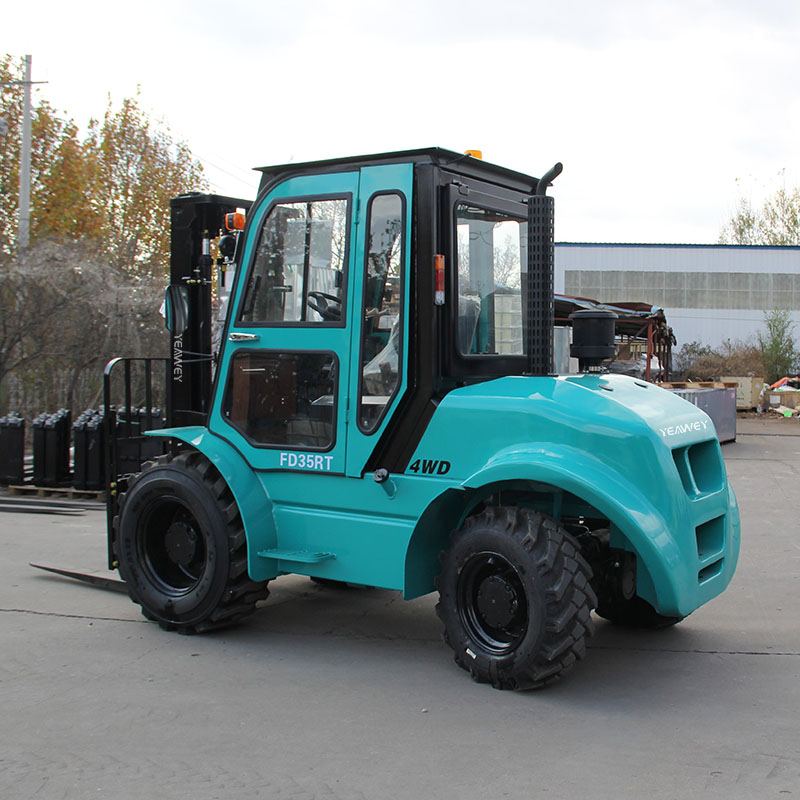
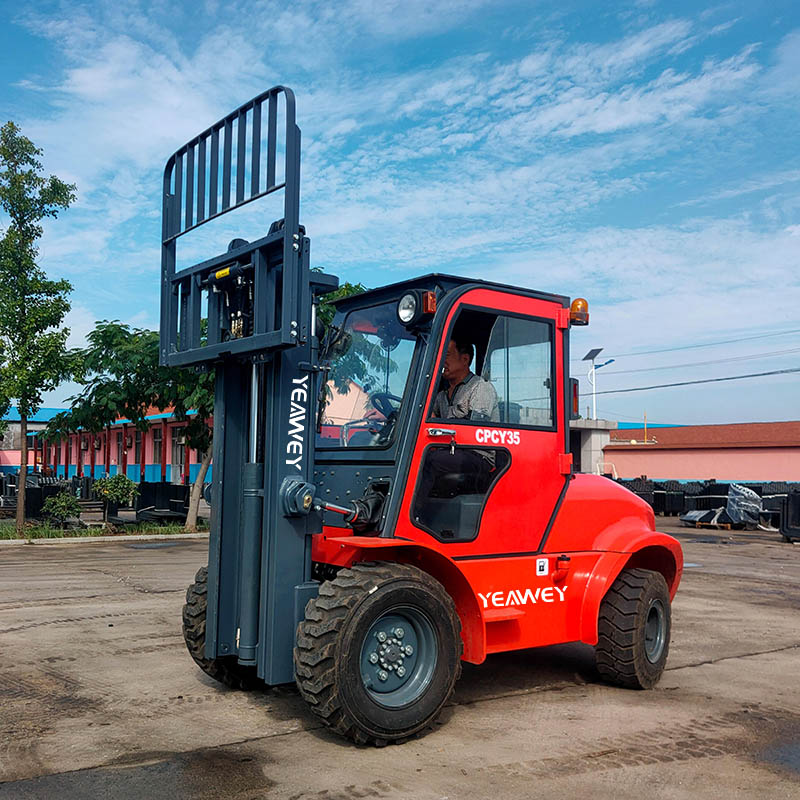
A Rough Terrain Forklift is a heavy-duty vehicle designed specifically for outdoor use, where the surface is uneven or unstable. These forklifts come equipped with features that ensure they can handle the challenges of rugged environments. The main features of Rough Terrain Forklifts include:
● Large Pneumatic Tires: These tires provide the necessary traction and shock absorption on surfaces like gravel, sand, or muddy ground.
● High Ground Clearance: The increased clearance allows the forklift to move over obstacles such as rocks or uneven terrain without getting stuck or damaged.
● Powerful Diesel Engines: Typically, these forklifts are powered by diesel engines, which provide the torque and strength required for lifting heavy loads.
Unlike standard forklifts, which are built for flat, stable surfaces, Rough Terrain Forklifts are engineered to perform efficiently on difficult surfaces where other forklifts would fail.
While both types of forklifts are used for material handling, Rough Terrain Forklifts and standard forklifts serve different purposes and are built for different environments. Some key differences include:
● 4WD or 2WD Systems: Rough Terrain Forklifts often come with either a 2WD or 4WD system, making them ideal for navigating through mud, gravel, or slopes. Standard forklifts typically have a 2WD system and are meant for use on flat surfaces.
● Tire Size and Type: Rough Terrain Forklifts are equipped with large, pneumatic tires that offer better traction and shock absorption, while standard forklifts use smaller, solid tires suited for indoor, stable surfaces.
● Ground Clearance: Rough Terrain Forklifts have significantly higher ground clearance compared to standard forklifts, which allows them to handle obstacles and rough terrain without difficulty.
These design modifications allow Rough Terrain Forklifts to work in conditions where standard forklifts would be ineffective, ensuring that material handling continues smoothly even on difficult surfaces.
Industries like construction, mining, and agriculture face unique challenges that require specialized equipment. Rough Terrain Forklifts provide solutions to these challenges by ensuring that materials can be lifted and moved even on unstable and uneven terrain. Some reasons why they are necessary include:
● Construction Sites: These forklifts can carry heavy building materials over rough, uneven ground, ensuring the timely completion of projects.
● Mining Operations: In mining, Rough Terrain Forklifts are used to transport heavy equipment and mined materials across rugged surfaces like dirt roads and rocky areas.
● Agriculture: Farmers use Rough Terrain Forklifts to move crops or equipment across fields, which may be muddy or uneven.
In each of these sectors, Rough Terrain Forklifts make operations more efficient and safer, reducing downtime and increasing productivity.
A Rough Terrain Forklift is typically powered by a diesel engine. The engine provides the torque necessary for lifting heavy loads and maintaining stability on uneven surfaces. Diesel engines are preferred for these forklifts because they offer higher torque and better fuel efficiency, making them suitable for long hours of operation in tough conditions.
The engine works in tandem with the forklift's traction system, which helps move the vehicle across rugged terrain. The 4WD or 2WD systems allow the forklift to tackle slopes and navigate through challenging surfaces like mud and gravel.
The tires and suspension system of a Rough Terrain Forklift are essential for ensuring the forklift’s ability to operate in difficult conditions. Here’s how they function:
● Large Pneumatic Tires: These tires are filled with air, allowing them to absorb shocks and vibrations from uneven surfaces. The larger the tire, the better the grip and the more shock absorption, which results in a smoother ride.
● Suspension System: The suspension system in Rough Terrain Forklifts is designed to absorb the impact from rough surfaces and prevent tipping. It works alongside the tires to ensure stability, allowing for safer lifting and maneuvering over rough terrain.
One of the main benefits of using a Rough Terrain Forklift is the significant improvement in productivity. These forklifts are specifically designed to work in environments where other forklifts cannot, allowing workers to continue lifting and moving materials even in tough, uneven conditions. This ensures that projects are completed on time, even when the terrain is challenging.
Safety is a critical factor in any industrial setting, and Rough Terrain Forklifts are designed with operator safety in mind. Features like enhanced stability, larger tires, and robust suspension systems reduce the risk of tipping or accidents, even when working on uneven or unstable ground. This makes them essential in industries like construction and mining, where operator safety is paramount.
Although Rough Terrain Forklifts require a higher initial investment compared to standard forklifts, their durability and ability to handle rough terrain make them a more cost-effective option in the long run. These forklifts require less maintenance and can work for longer hours in challenging conditions, leading to reduced downtime and fewer repair costs.
Feature | Description |
Ground Clearance | Higher ground clearance allows the forklift to navigate over obstacles like rocks and debris. |
Lifting Capacity | The forklift should have sufficient lifting capacity to handle heavy loads without strain. |
Lifting Height | Consider the height needed for stacking or lifting materials to higher platforms. |
Tires | Pneumatic tires provide shock absorption, ensuring better stability and traction on rough surfaces. |
Suspension | A good suspension system absorbs impacts from rough surfaces, ensuring smooth operation and stability. |
Traction System | 4WD or 2WD systems help improve mobility, especially on uneven or challenging surfaces like mud or sand. |
When choosing a Rough Terrain Forklift, ground clearance is one of the most important factors to consider. A forklift with higher ground clearance will be able to navigate over obstacles like rocks, debris, or uneven ground without getting stuck. The forklift’s stability, supported by its suspension and traction systems, also plays a crucial role in preventing tipping and ensuring safe lifting.
The lifting capacity of a Rough Terrain Forklift is vital for handling heavy loads. Whether it’s moving construction materials, mining equipment, or agricultural products, the forklift must be able to lift materials safely and efficiently. Additionally, the lifting height is crucial when working in areas with stacked materials or when lifting to higher platforms.
The type of tires and traction systems on a Rough Terrain Forklift significantly impacts its performance. Pneumatic tires are typically preferred for their shock-absorbing capabilities, while traction systems ensure that the forklift can maintain grip on uneven or slippery surfaces.
A Rough Terrain Forklift is a crucial piece of equipment for industries that operate in challenging outdoor environments. Whether it’s construction, mining, or agriculture, these forklifts ensure efficient material handling on uneven, unstable ground. Their powerful engines, large tires, and high ground clearance make them ideal for navigating rugged terrain, ensuring that work continues smoothly, safely, and efficiently. When selecting a Rough Terrain Forklift, businesses should consider factors such as ground clearance, lifting capacity, and tire type to ensure they choose the right model for their needs. With the proper forklift from YEAWEY, companies can boost productivity, enhance safety, and reduce operational costs in tough environments.
A: A Rough Terrain Forklift is a specialized vehicle designed to handle uneven and challenging outdoor surfaces. It is equipped with large tires, high ground clearance, and powerful engines, making it ideal for construction, agriculture, and mining environments.
A: Rough Terrain Forklifts are essential for handling heavy materials on rugged surfaces where standard forklifts can’t operate. Their 4WD or 2WD systems, high clearance, and large tires make them perfect for off-road conditions.
A: A Rough Terrain Forklift uses a diesel engine to power its lifting capacity, with large tires and a suspension system that absorbs shock and enhances traction on uneven or soft surfaces like mud and gravel.
A: The main benefits of a Rough Terrain Forklift include increased productivity in challenging conditions, enhanced safety for operators, and cost savings due to its durability and ability to work in tough environments.
A: When selecting a Rough Terrain Forklift, consider factors like ground clearance, lifting capacity, tire type, and traction systems to ensure optimal performance on the specific terrain where it will be used.


