
Views: 0 Author: Site Editor Publish Time: 2026-03-10 Origin: Site


Diesel forklifts are essential tools in industries that require the lifting and transportation of heavy loads. The ability to lift materials to significant heights is one of the most crucial features of these machines. This article explores the lifting capabilities of diesel forklifts, how they operate, and the factors that influence their lift height. We’ll also look at how to choose the right forklift based on your operational needs and provide some practical tips for maximizing the use of high-lift forklifts.
The mast of a forklift is the vertical assembly that raises and lowers the forks. It consists of a series of steel columns that can be extended and retracted, enabling the forklift to lift materials to different heights. The mast is a critical component in determining the forklift's maximum lifting height, which is why understanding its design is crucial when selecting the right forklift for your business.
Forklift masts are typically categorized into two main types:
Two-stage mast: A two-stage mast offers a lower lifting height, generally up to 4 meters (about 13 feet). It’s typically used for jobs that don’t require lifting materials high, such as unloading containers or stacking pallets within a warehouse.
Three-stage mast: This type of mast provides higher lifting capabilities, with a maximum lift height ranging from 6 to 7 meters (about 20-23 feet). Three-stage masts are ideal for applications in larger warehouses or distribution centers, where taller storage racks are required.
Diesel forklifts typically have a lifting height ranging from 3 meters (10 feet) to over 10 meters (33 feet). The exact lift height depends on the forklift's mast configuration and design. Some models can lift heavier loads at shorter heights, while others, particularly those with three-stage masts, can lift lighter loads to higher levels.
Here’s a breakdown of common lift height ranges based on the forklift type:
Standard Diesel Forklifts: Typically lift between 3 meters (10 feet) and 5 meters (16 feet). These forklifts are commonly used in outdoor applications like construction sites or loading docks, where moderate lift heights are sufficient for heavy-duty tasks.
Heavy-Duty Diesel Forklifts: These forklifts can lift up to 7 meters (23 feet) and are used in industries that require heavy lifting and higher reach, such as steel mills, lumber yards, and large warehouses.
High Reach Diesel Forklifts: Some advanced models are capable of lifting materials as high as 10 meters (33 feet) or even more, especially in environments that demand extensive vertical storage or high stacking capacity, such as in large-scale distribution centers and port operations.
The lifting height of a diesel forklift is influenced by several factors. These factors play a significant role in how high a forklift can lift its load safely and efficiently.
As mentioned, the type of mast greatly affects the maximum lifting height. The more stages a mast has, the higher the forklift can lift. A two-stage mast is simpler and generally cheaper but limits the maximum lifting height. A three-stage mast can reach higher, making it ideal for jobs that require lifting loads to great heights.
Two-Stage Mast: Offers lifts up to 4 meters, typically used for low-height stacking.
Three-Stage Mast: Can lift up to 7 meters or higher, ideal for handling taller shelves and racking systems.
The load center refers to the horizontal distance between the forklift’s mast and the center of the load being lifted. The farther away the load is from the mast, the more challenging it becomes for the forklift to lift it to higher heights. As the load center increases, the forklift’s lifting capacity decreases, especially at higher mast heights.
Proper weight distribution is equally important. If the load is unevenly distributed or too heavy for the forklift, the lifting height will be compromised, and the forklift may become unstable or even tip over. Ensuring that the load is correctly centered and balanced is crucial for maintaining both stability and lifting capacity.
While the mast height determines how high the forklift can lift, the fork position also plays a role. When lifting loads to greater heights, the forklift's center of gravity shifts. The higher the load is lifted, the more pressure is exerted on the forklift’s chassis, which can affect its stability. Forklifts are designed to handle certain loads at specific heights, so it’s important to select the right forklift for the task at hand.
The type of tires and the terrain on which the forklift operates can also affect the lifting height. Diesel forklifts with pneumatic tires (air-filled) are typically designed for outdoor use and can handle rougher terrain. In contrast, forklifts with solid rubber tires are generally better suited for indoor operations on smooth, even floors. Rougher terrain can reduce the stability of the forklift when lifting materials to high points, so choosing the right tire type for the environment is crucial.
High lift diesel forklifts are essential in warehouses and distribution centers that require lifting materials to high shelves. These forklifts enable businesses to maximize vertical storage space, reducing the need for additional floor space. High-lift forklifts can efficiently stack goods on top racks and move items between floors, helping businesses optimize their operations.
On construction sites, forklifts with a higher lifting capacity are often required to handle large building materials, such as steel beams, timber, and concrete blocks. These forklifts need to lift heavy materials to elevated positions, whether for moving materials around the site or placing them in scaffolding or high storage areas. Diesel forklifts’ ability to lift higher allows construction crews to work more efficiently and safely.
In ports and harbor operations, heavy-duty diesel forklifts with extended lifting heights are used to move large shipping containers and cargo. The ability to lift containers to significant heights allows forklift operators to organize and stack cargo in dense storage areas, making efficient use of available space. High-lift forklifts are critical for quick turnaround times in busy port operations.
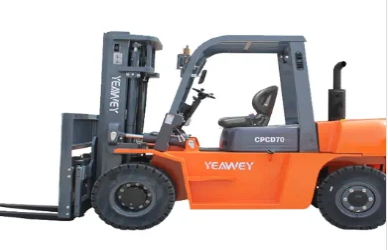
When choosing a diesel forklift, it’s essential to match the lifting height with your specific needs. Here’s how to determine the best forklift for your business:
For standard warehouse tasks, a 3 to 5-meter lift height is usually sufficient. This is ideal for stacking items on medium-height racks and moving goods between loading docks.
For more challenging tasks, such as stacking heavier loads or reaching high storage areas, a 7 to 10-meter lift height is ideal. This will allow for more versatile operations and handling of taller racks or high shelves.
It’s important to understand the relationship between lifting capacity and height. Forklifts are usually rated for a certain lifting capacity at a given height. For example, a forklift may be able to lift 5 tons at a height of 3 meters, but only 3 tons at a height of 7 meters. Therefore, the higher the lift, the lower the lifting capacity. Choose a forklift that has both the necessary lift height and lifting capacity for the materials you handle.
Forklift suppliers can help you identify the best machine for your specific needs. They can assess the type of materials you lift, the typical heights required, and your operational environment to recommend the most suitable forklift for your business.
Diesel forklifts typically offer lift heights ranging from 3 meters (10 feet) to over 10 meters (33 feet), depending on the mast type and design.
Two-stage masts offer lower lift heights (up to 4 meters), while three-stage masts provide higher lifts, ranging from 6 to 7 meters, and are ideal for taller storage.
No, lifting capacity decreases as the lift height increases. Forklifts are designed to lift heavier loads at lower heights and lighter loads at higher heights.
Ensure the load is properly balanced and avoid exceeding the forklift’s maximum rated capacity at higher lift heights. Use stabilizers or outriggers if needed to enhance stability.
In conclusion, understanding the lifting height capabilities of a diesel forklift is essential when selecting the right equipment for your business. Diesel forklifts typically offer lifting heights from 3 meters to over 10 meters, with several factors influencing their performance. These include mast type, load center, tire type, and the operating environment.
When choosing the right forklift, it's essential to consider your lifting height requirements, material weight, and storage configurations. A forklift with the correct lifting capacity and height can improve operational efficiency, increase storage capacity, and enhance safety.
Always consult with a forklift supplier to ensure you choose the correct model that meets your specific lifting needs, ensuring the safety and productivity of your operations.


