
Views: 0 Author: Site Editor Publish Time: 2026-03-23 Origin: Site


Diesel forklifts are widely used in industries like construction, manufacturing, and logistics due to their high power, reliability, and efficiency in handling heavy loads. However, one of the most significant operational costs associated with diesel forklifts is fuel consumption. Understanding how much fuel a diesel forklift uses and how to optimize fuel efficiency is crucial for businesses seeking to reduce operational costs and increase productivity. In this article, we will explore the key factors that influence the fuel consumption of diesel forklifts, typical fuel usage rates, ways to optimize fuel efficiency, and how fuel consumption compares to electric forklifts.
Several factors contribute to the fuel consumption of a diesel forklift. These factors can vary based on the type of operation, the size of the forklift, and the environment in which it is used. Below, we’ll break down the primary elements that impact how much fuel a diesel forklift uses.
One of the most significant factors influencing fuel consumption is the weight of the load being lifted. The heavier the load, the more power the diesel engine requires to lift and move it. Forklifts typically consume more fuel when lifting heavier loads, especially when the lift is performed at high speeds or over extended periods.
For instance, a forklift lifting heavy materials like steel beams or construction equipment will use more fuel than a forklift moving lighter loads like pallets or cartons.
Heavy loads (e.g., steel, machinery) require more energy for lifting, leading to higher fuel consumption.
Lighter loads (e.g., wooden crates, smaller items) allow for more efficient fuel use.
The type of terrain on which the diesel forklift operates also significantly impacts fuel consumption. Forklifts working in outdoor environments with rough terrain tend to consume more fuel due to the increased demand on the engine.
Rough terrain: Construction sites or outdoor storage yards often have uneven surfaces, slopes, and obstacles that require more effort from the forklift, leading to higher fuel consumption.
Smooth, flat surfaces: Indoor warehouses and distribution centers with smooth floors are more fuel-efficient environments for diesel forklifts since the engine doesn’t have to work as hard.
Modern diesel forklifts come equipped with more advanced engine technologies that improve fuel efficiency. Newer models with fuel-efficient engines use less fuel compared to older machines. Forklifts with advanced technologies, such as variable speed engines or fuel management systems, adjust engine performance to optimize fuel use depending on the load and the operating conditions.
The size of the forklift, including its engine power, weight, and lifting capacity, can also influence fuel consumption. Larger forklifts, which have more powerful engines to handle heavier loads, generally consume more fuel. Smaller forklifts with less power and lower lifting capacities use less fuel since they require less energy to perform basic tasks.
Here’s a breakdown of the factors that affect fuel consumption:
Factor | Impact on Fuel Consumption |
Load Size | Heavier loads increase fuel usage due to higher engine demand. |
Terrain Type | Rough, uneven terrain increases fuel usage due to additional effort required. |
Engine Efficiency | Newer, more efficient engines consume less fuel. |
Forklift Size and Design | Larger forklifts with powerful engines tend to use more fuel. |
Diesel forklift fuel consumption can vary significantly depending on several factors, including the forklift’s size, load capacity, engine type, and operating conditions. On average, diesel forklifts consume 2-4 gallons (7.5-15 liters) per hour, but this rate can be influenced by the aforementioned factors.
Different diesel forklifts have different fuel consumption rates depending on their lifting capacities. The table below illustrates the typical fuel consumption rates for various diesel forklift models based on their lifting capacity.
Forklift Capacity | Average Fuel Consumption (gallons/hour) | Typical Uses |
3-5 Ton Forklift | 2-3 gallons/hour | Light to medium-duty indoor and outdoor tasks |
6-7 Ton Forklift | 3-4 gallons/hour | Mid-duty operations in warehouses, manufacturing, and construction |
10-12 Ton Forklift | 4-5 gallons/hour | Heavy-duty tasks in construction sites, steel mills, and ports |
For example:
A 3-5 ton diesel forklift, commonly used for light to medium-duty tasks, will typically consume 2-3 gallons of fuel per hour.
A 10-12 ton diesel forklift, which is used for heavy-duty applications, may consume up to 4-5 gallons per hour due to the higher power required for lifting heavier loads.
Fuel consumption also depends on whether the forklift is operating indoors or outdoors:
Indoors (Smooth surfaces): Diesel forklifts operating on smooth floors, such as warehouses and distribution centers, tend to use less fuel compared to forklifts used in outdoor, rough terrain environments.
Outdoors (Rough terrain): Diesel forklifts used in construction sites, ports, or other rugged terrains will experience higher fuel consumption due to the added strain of moving on uneven surfaces.
Maximizing fuel efficiency in diesel forklifts can lead to significant cost savings over time. While fuel consumption is largely determined by factors like load and terrain, there are several strategies that can be employed to reduce fuel usage:
Routine maintenance is key to ensuring that a diesel forklift operates efficiently. Regular tasks such as:
Changing the oil regularly
Replacing the air filters and fuel filters
Checking tire pressure and ensuring proper alignment of the forks can keep the engine running efficiently.
Maintaining a well-serviced forklift can help prevent unnecessary fuel waste caused by engine inefficiency or mechanical problems.
Operator behavior plays a significant role in fuel consumption. Forklift operators can reduce fuel usage by:
Avoiding sudden accelerations or stops
Idling less: Avoid leaving the forklift idling for long periods when not in use.
Using the appropriate gears and speeds for the job.
Training operators to drive efficiently can significantly cut fuel consumption and reduce wear on the forklift’s engine.
Handling the right load size for the forklift is critical. Overloading the forklift not only puts extra strain on the engine but also increases fuel consumption. Operators should always ensure that loads do not exceed the forklift’s rated capacity, as this can significantly increase fuel consumption while compromising safety.
Fuel additives can improve engine performance and increase fuel efficiency. Certain additives can reduce friction within the engine, improve combustion, and reduce carbon build-up, helping to optimize fuel use.
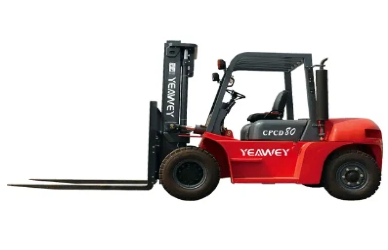
Fuel is one of the largest ongoing expenses in operating a diesel forklift. Here’s a breakdown of typical fuel costs based on average fuel consumption rates:
Forklift Capacity | Fuel Consumption (gallons/hour) | Operating Hours (per day) | Daily Fuel Consumption (gallons) | Daily Fuel Cost (per gallon $4) | Monthly Fuel Cost |
5 Ton Forklift | 3 gallons/hour | 8 hours | 24 gallons | $96 | $2,880 |
10 Ton Forklift | 4 gallons/hour | 8 hours | 32 gallons | $128 | $3,840 |
For a 5-ton diesel forklift, if it operates for 8 hours a day, it would consume approximately 24 gallons of fuel daily, translating to a fuel cost of around $96 per day. Over the course of a month, the fuel cost would be approximately $2,880.
In comparison, a 10-ton forklift with a fuel consumption rate of 4 gallons per hour would incur higher operating costs, amounting to $3,840 in fuel expenses per month.
While fuel consumption is a necessary cost, it can be optimized through regular maintenance, efficient operation, and proper load management. By following best practices, companies can significantly reduce fuel costs, improving the overall profitability of their forklift operations.
Although diesel forklifts tend to have higher fuel consumption, their efficiency is often offset by their heavy lifting capacity and longer operational hours. Electric forklifts, while offering zero emissions and lower operating costs in terms of electricity, have limited run-time and require frequent recharging, which could lead to downtime.
Forklift Type | Fuel Consumption | Advantages | Disadvantages |
Diesel Forklift | 2-5 gallons/hour | High lifting capacity, long operating hours | Higher fuel costs, emissions |
Electric Forklift | Electricity (charging) | Low operating costs, zero emissions, quiet operation | Limited run-time, higher initial cost |
While electric forklifts are more fuel-efficient in terms of energy use (electricity being cheaper than diesel), they come with their own set of trade-offs in terms of operational time and up-front cost. Diesel forklifts are better for heavy-duty tasks and environments where constant lifting is required.
A typical 5-ton diesel forklift consumes approximately 2-3 gallons of fuel per hour, depending on the load and terrain.
Proper maintenance, efficient driving habits, and effective load management can significantly reduce fuel consumption in diesel forklifts.
A 10-ton diesel forklift typically consumes 4-5 gallons of fuel per hour, depending on the lifting tasks and the operating environment.
Yes, electric forklifts are more fuel-efficient in terms of operating costs, as they use electricity rather than diesel. However, they have limited run-time and higher initial costs.
Understanding how much fuel a diesel forklift uses is essential for businesses looking to optimize their material handling operations. Factors such as load size, terrain type, engine efficiency, and forklift size play a crucial role in determining fuel consumption. By implementing fuel-efficient practices such as regular maintenance, efficient driving, and proper load management, companies can reduce their fuel costs and improve the overall efficiency of their forklifts.
For businesses that need to balance fuel efficiency with lifting capacity, it's essential to choose the right forklift for the task. While diesel forklifts provide greater power and longer operational times, electric forklifts offer a more cost-effective, environmentally-friendly solution for lighter, indoor operations.


