
Views: 0 Author: Site Editor Publish Time: 2025-11-03 Origin: Site


Forklifts are essential machines used in various industries for lifting, carrying, and stacking heavy loads. They are especially common in warehouses, construction sites, factories, and distribution centers. Among the many types of forklifts available, the 5-ton forklift stands out as one of the most versatile and widely used. But what exactly is a 5-ton forklift, and why is it such an important piece of equipment?
In this article, we will explore the definition of a 5-ton forklift, its capabilities, applications, and how it compares to other forklifts in terms of size and lifting capacity. We will also look at the features that make a 5-ton forklift a practical and reliable tool for a variety of tasks. By the end, you’ll have a clear understanding of what a 5-ton forklift is and how it is used in modern industries.
A 5-ton forklift refers to a type of industrial lift truck that has a lifting capacity of 5 tons (or 5,000 kilograms). This means that the forklift is designed to safely lift and transport loads weighing up to 5 tons. The term "ton" refers to the forklift's rated capacity, which is typically calculated at a load center of 24 inches (610 mm), which is the distance from the forklift’s mast to the center of the load being lifted. If the load is positioned farther from the forklift’s mast, the lifting capacity will decrease.
Forklifts are categorized based on their lifting capacities, and the 5-ton forklift is often considered a medium to large capacity forklift. While smaller forklifts, such as 1-2 ton forklifts, are ideal for lighter loads and smaller spaces, the 5-ton forklift is designed for heavier materials and tasks that require greater strength and lifting power.
The primary defining feature of a 5-ton forklift is its lifting capacity. A 5-ton forklift is designed to carry loads up to 5,000 kilograms or approximately 11,000 pounds. This makes it a good fit for heavy-duty applications, such as moving large pallets, construction materials, industrial equipment, and other bulky items.
The lifting capacity of a forklift is determined by several factors, including the size of the mast, the type of tires, and the weight distribution of the machine. Forklifts are equipped with hydraulic systems that allow the mast to raise and lower the forks, providing the lifting power needed to move heavy loads.
The fork length and load center play a crucial role in determining how much weight a forklift can safely lift. The standard load center for a 5-ton forklift is usually 24 inches, which means that the weight being lifted must be placed 24 inches from the center of the forklift's mast for the forklift to handle the load safely. If the load is positioned farther out, it may reduce the forklift’s lifting capacity.
Fork length can vary depending on the specific forklift model, but typical lengths range from 42 to 48 inches. Longer forks may be needed to accommodate larger pallets or specialized loads.
The mast height of a 5-ton forklift determines how high it can lift loads. Forklifts are equipped with a two-stage or three-stage mast, which allows them to lift loads to varying heights depending on the application. Common lifting heights for a 5-ton forklift range from 10 to 20 feet (3 to 6 meters), but higher lifts are available for specialized models. The ability to lift to considerable heights is particularly useful in warehousing and distribution centers where stacking products is a common task.
5-ton forklifts are available in a variety of power sources, each suited to different types of operations. The most common power sources include:
Internal Combustion (IC) Forklifts: Powered by either gasoline, diesel, or liquefied petroleum gas (LPG), these forklifts are ideal for outdoor use or in environments where high power is needed for lifting heavy loads. Diesel-powered forklifts are often preferred for heavy-duty applications due to their higher torque.
Electric Forklifts: These forklifts run on rechargeable batteries and are commonly used in indoor settings, such as warehouses and factories, due to their quieter operation and lower emissions. While they tend to have a slightly lower lifting capacity than IC forklifts, advancements in battery technology have allowed electric forklifts to reach similar capacities to their gas-powered counterparts.
Hydrogen Fuel Cell Forklifts: A relatively newer technology, fuel cell forklifts combine the benefits of electric forklifts with the longer operating times of internal combustion engines. These forklifts are ideal for businesses seeking a more sustainable and eco-friendly alternative.
The type of tires on a 5-ton forklift affects its stability, traction, and suitability for different environments. There are generally two types of forklift tires:
Pneumatic Tires: These are air-filled tires that provide better stability and are typically used for outdoor operations, including rough terrains, construction sites, and yard operations. Pneumatic tires are suitable for 5-ton forklifts because they offer better traction and impact resistance when lifting heavy loads.
Solid Tires: Made from rubber or polyurethane, solid tires are ideal for indoor use or on smooth surfaces. They are puncture-resistant, which makes them a good choice for operations in warehouses or other environments where sharp objects are present on the ground.
The choice of tire type depends on the environment in which the forklift will operate. Pneumatic tires are typically used in outdoor settings, while solid tires are better suited for smooth, indoor surfaces.
Operator comfort and safety are essential when it comes to forklifts, especially for heavy-duty models like the 5-ton forklift. Features such as ergonomic seating, adjustable steering columns, and intuitive control panels make operating a forklift easier and more comfortable. In addition, modern 5-ton forklifts are equipped with safety features such as:
Load Backrests: These prevent the load from tipping backward, ensuring the operator's safety.
Overhead Guard: This protects the operator from falling objects.
Stability Control Systems: These systems help prevent the forklift from tipping over during operation, especially when lifting heavy loads.
Warning Systems: Audible alarms or flashing lights alert nearby workers when the forklift is in use.
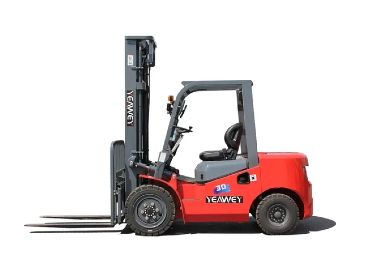
The 5-ton forklift is widely used in industries where lifting and transporting heavy loads are common. Some of the key applications of a 5-ton forklift include:
In warehouses and distribution centers, the 5-ton forklift is used to move heavy pallets, stock, and materials. With its ability to lift and stack large items, it is essential for organizing inventory and maintaining efficient operations in facilities with high volumes of goods.
5-ton forklifts are commonly used on construction sites to move heavy building materials, such as concrete blocks, steel beams, and timber. They are often used in outdoor environments where terrain may be uneven, making pneumatic tires an ideal choice for construction applications.
In manufacturing facilities, 5-ton forklifts are essential for moving raw materials, parts, and finished products. They are often used to transport heavy equipment, machinery, and supplies from one area to another within the facility. Their high lifting capacity is especially useful for handling large industrial components.
5-ton forklifts are often used in loading docks for shipping and receiving. They help load and unload containers, trucks, and shipping vehicles, making them a critical part of the logistics chain in industries such as retail, automotive, and food processing.
In agriculture, 5-ton forklifts are used to lift and transport heavy loads of crops, feed, or farming equipment. They can help load materials onto trucks for transportation or move bulk goods around farms and processing plants.
A 5-ton forklift is a versatile and essential piece of equipment in industries that require lifting and moving heavy materials. With its ability to carry up to 5,000 kilograms of weight, it is suitable for a wide range of applications, from warehouses to construction sites, manufacturing plants to agricultural operations. The 5-ton forklift is a medium to large capacity forklift that offers the strength, durability, and flexibility needed to handle heavy-duty tasks, providing businesses with a reliable solution for material handling.
For businesses looking to invest in a 5-ton forklift, it’s important to choose the right model based on the environment in which it will operate, the type of loads it will carry, and the features that will ensure both operator safety and comfort.


