
Views: 0 Author: Site Editor Publish Time: 2026-03-16 Origin: Site


Diesel forklifts are essential equipment in material handling, offering superior strength and durability for moving heavy loads across various industries. When choosing between a 5-ton and a 10-ton diesel forklift, it's crucial to understand how they differ in terms of lifting capacity, engine power, size, and performance. Selecting the right forklift for your business can impact your operational efficiency, safety, and overall productivity. In this article, we’ll explore the key differences between these two types of diesel forklifts to help you make a well-informed decision.
A diesel forklift is a type of industrial vehicle powered by a diesel engine, designed to lift and move heavy materials. Diesel forklifts are commonly used in environments where larger, more powerful machines are required to handle substantial loads and operate in outdoor or rugged conditions. They are known for their durability, efficiency, and ability to operate for long periods without frequent refueling. Diesel-powered forklifts are particularly popular in industries like construction, manufacturing, and logistics, where heavy-duty material handling is common.
One of the most critical factors when selecting a diesel forklift is its weight capacity, which directly impacts how much weight the machine can lift. Forklifts come in various weight classes, and understanding these weight ratings helps you select the right forklift for your needs. The 5-ton diesel forklift is suitable for lighter to medium-duty applications, while the 10-ton diesel forklift can handle heavier loads and is often required for more demanding tasks in construction and heavy industries.
When it comes to choosing between a 5-ton and 10-ton diesel forklift, there are several key differences to consider, including lifting capacity, engine power, size, and maneuverability.
Feature | 5 Ton Diesel Forklift | 10 Ton Diesel Forklift |
Lifting Capacity | Up to 5 tons | Up to 10 tons |
Load Handling | Suitable for lighter loads | Handles much heavier, bulkier loads |
Common Uses | Warehouses, small construction sites | Heavy-duty construction, steel, ports |
The most obvious difference between the two types of forklifts is their lifting capacity. A 5-ton diesel forklift can lift up to 5 tons, making it ideal for lighter-duty tasks such as stacking pallets in warehouses or handling lighter materials in construction. In contrast, a 10-ton diesel forklift is designed for heavy-duty applications and can handle twice the load of a 5-ton forklift. This makes the 10-ton model more suitable for industries like steel manufacturing, large construction projects, and port operations, where moving heavy cargo and materials is a daily task.
The engine power of a diesel forklift determines how efficiently it can lift and move heavy loads.
5 Ton Diesel Forklift: A 5-ton forklift typically comes with a smaller engine, offering sufficient power to handle lighter loads while maintaining fuel efficiency. These forklifts are designed for lighter operations and consume less fuel compared to their larger counterparts.
10 Ton Diesel Forklift: A 10-ton forklift requires a more powerful engine, often with higher horsepower, to support its increased lifting capacity. The engine is designed to move and lift heavier loads without compromising performance. However, this power increase comes at the cost of greater fuel consumption and more frequent maintenance requirements.
The size and dimensions of the forklift affect not only its lifting capacity but also its maneuverability in different environments.
5 Ton Diesel Forklift: Generally, the 5-ton forklift is more compact, with a smaller wheelbase and narrower frame. This allows for better maneuverability in tight spaces, such as narrow aisles in warehouses or smaller construction sites.
10 Ton Diesel Forklift: The 10-ton forklift is larger, with a wider wheelbase and heavier frame, which provides the stability needed to lift heavy loads. However, this size can make the forklift less maneuverable in confined spaces. As such, the 10-ton model is better suited for open outdoor environments like construction sites, yards, or ports.
Feature | 5 Ton Diesel Forklift | 10 Ton Diesel Forklift |
Maneuverability | High - ideal for tight spaces | Lower - better for open areas |
Turning Radius | Smaller turning radius, more agile | Larger turning radius, less agile |
Use in Confined Spaces | Suitable for narrow aisles, tight spaces | Less ideal for confined spaces |
Due to its smaller size and lighter weight, the 5-ton forklift generally offers better maneuverability, making it ideal for confined spaces such as narrow aisles in warehouses and smaller work sites. On the other hand, the 10-ton forklift, while offering superior lifting capacity, has a larger turning radius and is typically less agile. It is best suited for outdoor environments where there is plenty of space to maneuver the larger vehicle.
Due to their size and engine power, the fuel efficiency of a 5-ton diesel forklift differs significantly from that of a 10-ton model.
5 Ton Diesel Forklift: More fuel-efficient due to its smaller engine size and lighter weight. It’s ideal for applications where fuel costs are a concern and where heavy lifting is not required.
10 Ton Diesel Forklift: Consumes more fuel due to its larger engine and heavier load capacity. While it may be less fuel-efficient, its high lifting capacity is necessary for handling larger, bulkier materials.
The operational speed of a forklift is influenced by its weight capacity and engine power. The 5-ton diesel forklift typically has faster operational speeds, as it is lighter and requires less power to lift and move materials. This makes it ideal for environments where speed is critical, such as fast-paced warehouse operations.
In contrast, the 10-ton diesel forklift may operate at slower speeds, as it is heavier and more powerful. While it can handle larger loads, it is not as fast as the 5-ton forklift, especially when lifting heavy materials to high elevations. However, the trade-off is that the 10-ton forklift excels at moving large volumes of heavy materials efficiently.
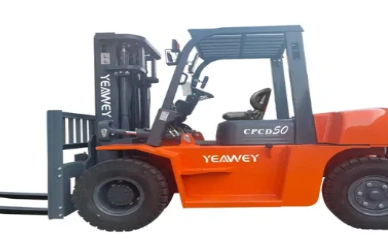
Both 5-ton and 10-ton diesel forklifts have distinct roles in various industries. The key differences in their lifting capacities and engine power make them better suited to different applications.
Warehouses: Ideal for handling lighter materials and stacking pallets in confined spaces.
Small Construction Sites: Suitable for moving moderate weight materials such as timber or smaller machinery.
Logistics and Distribution: Used in lighter load environments where speed and maneuverability are more important than lifting capacity.
Construction: Designed for handling heavy building materials such as steel beams and large machinery.
Port Operations: Used for moving large shipping containers and heavy cargo, where high lifting capacity is needed.
Heavy Industry: Works well in industries like steel manufacturing, mining, and lumber, where moving bulkier loads is required.
When choosing between a 5-ton and 10-ton diesel forklift, consider the following:
Load Type: Choose a 5-ton forklift for lighter loads and a 10-ton forklift for heavier, bulkier materials.
Operational Environment: If you work in tight spaces or indoor areas, a 5-ton forklift may be more suitable. For outdoor construction sites and open yards, a 10-ton forklift will provide the necessary lifting capacity.
Fuel Efficiency: A 5-ton forklift is more fuel-efficient, making it ideal for industries with lower lifting needs or where fuel costs are a primary concern.
It’s always a good idea to consult with forklift suppliers for tailored recommendations. They can help you assess your specific requirements and match you with the right forklift, ensuring that you get the best equipment for your operations.
A 5-ton diesel forklift is more fuel-efficient, has a smaller turning radius, and is better suited for confined spaces, making it ideal for indoor use.
Consider the weight of the materials you handle regularly. If they are heavy and bulky, a 10-ton forklift is ideal. For lighter loads, a 5-ton forklift is sufficient.
10-ton diesel forklifts are generally better suited for outdoor use due to their larger size and less maneuverability. For indoor environments, a 5-ton forklift is often more practical.
A 10-ton forklift generally requires more frequent maintenance, including engine servicing, due to its larger size and more powerful engine. The 5-ton forklift typically has lower maintenance costs.
In conclusion, the choice between a 5-ton and 10-ton diesel forklift depends on several factors, including load requirements, operational environment, and fuel efficiency. The 5-ton diesel forklift is ideal for lighter tasks and indoor use, offering better maneuverability and fuel efficiency. The 10-ton diesel forklift, on the other hand, excels in heavy-duty tasks, particularly in outdoor environments where heavy materials need to be moved. By understanding the differences between the two and considering your specific needs, you can select the forklift that best fits your business operations.


