
Views: 0 Author: Site Editor Publish Time: 2026-06-16 Origin: Site


Standard forklifts easily navigate flat warehouse floors. Moving them onto loose gravel or mud introduces serious safety hazards. Paved environments forgive minor balance issues. Natural terrain quickly punishes them. Moving heavy loads across unpredictable environments requires specialized engineering. Traditional lifts lack the traction and ground clearance needed for outdoor job sites. They frequently get stuck. They also risk fatal rollovers when handling elevated loads on uneven gradients.
Our goal today focuses on defining specific operational use cases. We will clarify the technical distinctions separating these machines from standard heavy-duty lifts. You will learn an evaluation framework to match equipment directly to your site requirements. We cover structural differences, application realities, and safety compliance protocols. You can then confidently deploy the right lifting solution for your toughest environmental challenges.
Rough terrain forklifts are classified by OSHA as Class VII vehicles, engineered specifically for unpaved natural terrain and disturbed construction sites.
Selecting the right equipment requires choosing between vertical mast, variable reach (telehandlers), and truck-mounted configurations based on lift-height needs and site layout.
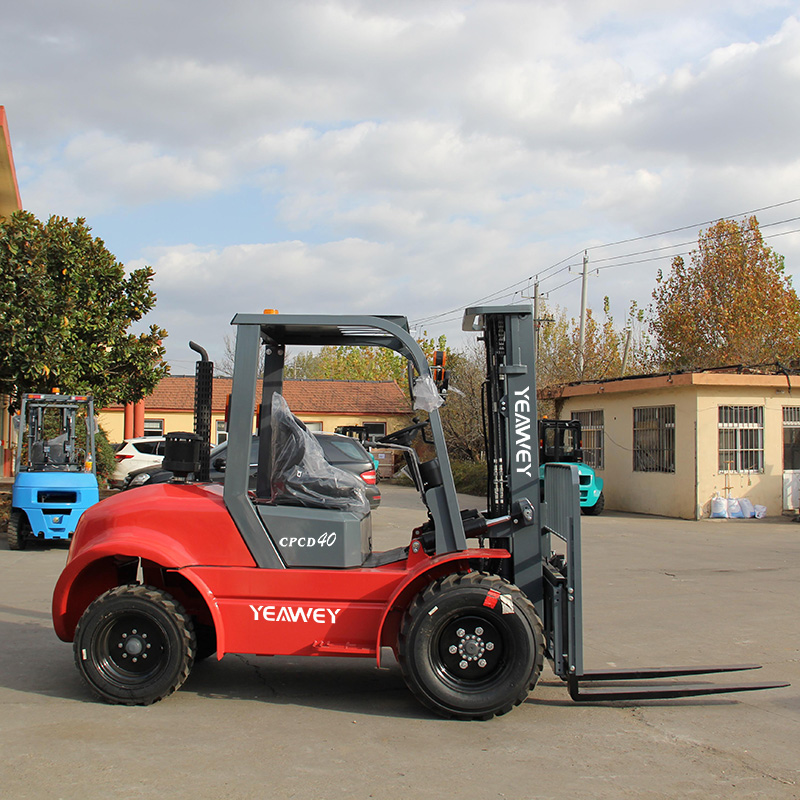
Unlike standard pneumatic tire forklifts, rough terrain models feature reinforced chassis, enhanced ground clearance, and specialized drivetrains (often 4WD) to prevent rollovers and equipment damage.
Deploying this equipment introduces specific OSHA compliance requirements (three-year certification cycles) and aggressive maintenance protocols for structural welds and filtration systems.
Industrial lifting equipment falls into specific regulatory categories. The Occupational Safety and Health Administration (OSHA) officially designates rough terrain models as Class VII equipment. This classification strictly separates them from standard indoor warehouse lifts. Regulatory bodies recognize their unique operational environment. Manufacturers engineer Class VII vehicles specifically for unpaved natural terrain. They also design them to handle the disturbed earth found across active construction sites.
Many buyers fall victim to a common misconception regarding tires. They assume any lift rolling on air-filled pneumatic tires can handle rugged outdoor environments. This assumption often leads to dangerous deployments. We must clarify this point. All rough terrain models have pneumatic tires. However, not all pneumatic tire forklifts can safely handle rough terrain. A standard outdoor forklift functions similarly to a basic two-wheel-drive pickup truck. It drives well on compacted dirt or asphalt. A true Rough Terrain Forklift functions like a purpose-built 4x4 off-road vehicle. It conquers deep mud, loose gravel, and steep inclines.
The differences extend deeply into the machine's structural engineering. Consider the following physical distinctions:
Significantly higher ground clearance: These machines sit much higher off the ground. This elevation protects the delicate undercarriage components. It prevents severe damage from hidden rocks, thick roots, and deep ruts.
Wider stance and counterweight distribution: Uneven gradients shift the center of gravity drastically. Manufacturers widen the axle stance. They also alter the counterweight distribution. These changes maintain stability and prevent catastrophic side-tip incidents.
Reinforced mast construction: Driving over bumps causes dynamic load shifts. The material bounces heavily on the forks. Standard masts flex and warp under these dynamic forces. Rough terrain models utilize thicker steel and reinforced channels to handle aggressive bouncing.
Deploying the right lift requires understanding your exact environmental challenges. Different industries demand specific performance traits. You must match the equipment directly to your site realities. A machine perfectly suited for a flat lumber yard might fail completely in a muddy agricultural field.
Active construction sites present incredibly challenging terrain. Operators constantly move palletized materials across disturbed dirt. They transport heavy bricks, concrete blocks, and lumber over gravel. Space remains tight, and the ground surface changes daily. Modern commercial construction also requires significant vertical reach. Crews frequently use these machines to elevate materials directly to second or third-story scaffolding. This eliminates manual hauling and speeds up the entire building process.
Agricultural applications introduce severe moisture and traction issues. Farm yards often turn into deep mud during rainy seasons. Landscape supply lots feature deeply rutted pathways. You need specialized machines to transport heavy soil crates here. Operators move massive fertilizer pallets and bulk animal feed across these slippery surfaces. Deep-tread agricultural tires bite into the mud. They provide forward momentum when standard industrial tires would just spin helplessly.
Remote industrial sites push these vehicles to their absolute limits. Forestry and oil/gas operations happen far from paved roads. The weather severely compromises traction. Operators must handle un-palletized, highly irregular loads. They move massive timber logs and long steel piping. The equipment must survive harsh weather, freezing temperatures, and unpredictable ground integrity. Safety margins remain narrow in these remote areas. Reliability becomes paramount.
Material delivery creates a unique logistical problem. Delivery drivers cannot rely on local job site equipment. Sometimes the site has no equipment available at all. Truck-mounted variations solve this problem beautifully. These agile units attach directly to the back of a commercial flatbed truck. The driver arrives at the remote job site. They autonomously dismount the forklift. They can then deliver materials precisely where the contractors need them. This independence transforms the logistics chain.
You cannot buy a one-size-fits-all off-road lift. Manufacturers build distinct configurations to solve specific operational problems. Selecting the right type requires evaluating your lift-height needs and your site layout. We separate them into three primary categories.
These models resemble traditional warehouse lifts but feature massive tires and robust frames. They utilize a traditional straight up-and-down lifting mechanism. They excel at moving heavy load capacities in open but uneven outdoor yards. Lumber yards and large pipe yards rely heavily on them. They offer excellent forward visibility. However, they carry significant limitations. A vertical mast only lifts straight up. The operator must drive the machine directly up to the drop-off point. They cannot reach over trenches or fences.
Telehandlers look completely different from traditional lifts. They feature a telescopic boom extending forward and upward. Construction sites rely heavily on them. They solve the forward reach problem perfectly. You can place loads completely over obstacles. You can easily elevate materials onto elevated platforms or through upper-story windows. They offer incredible versatility. Yet, they introduce complex load-capacity charts. The machine's lifting capacity decreases significantly as the boom extends forward. Operators must carefully calculate maximum safe weights based on boom extension and angle.
We discussed these briefly in the delivery section. They serve delivery fleets primarily. The lightweight frame allows them to mount safely on commercial trailers. They drop off the back quickly. They do not offer the massive lift heights of telehandlers. They also cannot lift the extreme weights of heavy-duty vertical mast models. However, they provide unmatched autonomy for delivery drivers navigating residential or commercial build sites.
Equipment Type | Best Suited For | Primary Limitation | Typical Lift Movement |
|---|---|---|---|
Vertical Mast | Heavy capacities in open outdoor yards | Cannot reach forward over obstacles | Strictly vertical |
Variable Reach | Reaching elevated or obstructed drop zones | Capacity drops rapidly as boom extends | Vertical, horizontal, angled |
Truck-Mounted | Independent delivery fleets | Lower overall lift capacity and height | Strictly vertical |
You must evaluate specific technical parameters before finalizing any equipment choice. Do not just look at the maximum lift capacity. A Rough Terrain Forklift requires careful drivetrain and ergonomic assessments. Let us break down the critical specifications you need to shortlist.
You must evaluate two-wheel drive (2WD) versus four-wheel drive (4WD). This choice defines your machine's capability. 2WD models handle compacted gravel, dry dirt, and relatively flat outdoor surfaces perfectly well. They offer tighter turning radiuses in some cases. However, 4WD is absolutely mandatory for snow, deep mud, or loose sand. If your site experiences heavy seasonal rain, skip the 2WD. You will eventually sink.
Transmission choice greatly impacts operator control. Buyers typically assess two main options: hydrostatic transmissions and traditional torque converter transmissions. Hydrostatic systems use hydraulic fluid to transfer power. They provide smoother deceleration. They also offer incredibly precise creeping control on steep inclines. Operators can inch forward without rolling backward. Torque converters perform similarly to standard car transmissions. They offer great top speeds and long-distance travel efficiency across massive job sites.
You must carefully account for load degradation. Capacities on heavy-duty models can range well over 10,000 lbs. However, you must look downward as well as upward. Site soil compaction must support the machine's gross weight. A machine fully loaded with 10,000 lbs of steel weighs a tremendous amount. If the soil remains uncompacted or wet, the entire machine will sink into the mud. Evaluate ground bearing pressure alongside lift capacity.
Outdoor operations subject drivers to extreme fatigue. They bounce over rocks and sit in the hot sun. Closed cabs featuring HVAC systems are no longer luxury items. They are critical safety features. Vibration reduction seats protect the operator's spine. 360-degree visibility prevents devastating backup accidents. Reducing operator fatigue directly reduces load-drop incidents during extended outdoor shifts.
Specification Feature | Assessment Goal | Critical Environment |
|---|---|---|
4WD Drivetrain | Maximum traction and gradeability | Deep mud, snow, loose sand |
Hydrostatic Transmission | Precise inching and ramp holding | Sloped terrain, precise drop zones |
Closed Cab (HVAC) | Operator fatigue reduction | Extreme heat, extreme cold, heavy dust |
Operating heavy machinery off-road introduces aggressive wear and strict regulatory scrutiny. You cannot maintain these machines like indoor warehouse lifts. They require highly aggressive maintenance protocols. They also demand specialized operator training to remain compliant and safe.
The job site tries to destroy the equipment daily. Constant bouncing on uneven terrain places immense stress on the entire frame. Daily visual inspections become critical. Operators must check overall weld integrity. They must look actively for micro-cracks around the mast and axle mounts. Catching a micro-crack early prevents a catastrophic structural failure under load.
High-dust environments demand hyper-vigilant filtration maintenance. Construction and agricultural sites fill the air with particulate matter. You must execute significantly higher frequencies of air filter replacements. Radiator cleanings must happen regularly. Neglecting the radiator allows dust to block airflow. This quickly causes severe engine overheating.
Tire wear also requires strict attention. Oversized pneumatic tires are naturally prone to sidewall gouges. Job site debris like nails, rebar, and sharp rocks cause frequent punctures. You must mandate strict daily pressure monitoring. Operating on under-inflated tires severely compromises machine balance. It drastically increases the likelihood of fatal tip-overs when turning on slopes.
Regulatory compliance carries severe penalties for negligence. OSHA explicitly dictates the rules for Class VII operation. First, operators must be at least 18 years old. You cannot assign this equipment to younger laborers. Second, generalized forklift training fails compliance standards. Training must be highly specific to Class VII vehicles. Instructors must cover specific machine controls. They must teach handling loads on uneven gradients. They must also drill emergency rollover response protocols.
Finally, certifications do not last forever. OSHA strictly requires training renewal. Operators must undergo complete re-evaluation every three years. They must demonstrate practical competence, not just pass a written test. Maintaining a tight schedule for these renewals protects your crew and your site compliance.
Rough terrain forklifts are not just standard warehouse lifts wearing upgraded tires. They represent specialized Class VII machinery. Engineers build them specifically for immense traction, high ground clearance, and reliable load stability across highly unpredictable environments. They conquer conditions where normal lifts fail immediately. Vertical masts, telehandlers, and truck-mounted units each solve unique logistical problems.
Before proceeding, we strongly advise buyers to conduct a comprehensive site audit. Accurately assess your maximum terrain gradients. Measure your absolute maximum lift heights. Weigh your heaviest anticipated loads. Complete this audit before requesting a specification sheet or scheduling a dealer demo. This proactive step ensures you achieve an accurate, safe machine match.
A: Generally, no. Their large physical footprint makes warehouse navigation impossible. High emissions from diesel or high-output gas engines create severe indoor toxicity risks. Furthermore, their aggressive tire treads easily damage polished concrete floors. They remain unsuitable and unsafe for indoor warehouse environments.
A: Depending on the specific model and transmission, top speeds can reach up to 24 mph. However, operators rarely drive them at maximum speed. Operational speeds are strictly dictated by site safety rules, ground conditions, and dynamic load stability.
A: Smaller utility models and truck-mounted variants lift around 4,000 lbs. Heavy-duty industrial models can safely lift 8,000 to over 10,000 lbs. Always remember, the ground beneath the tires must be stable enough to support both the machine and the load weight.


